Politecnico di Torino hosted H2SHIFT Consortium for its last Plenary Meeting
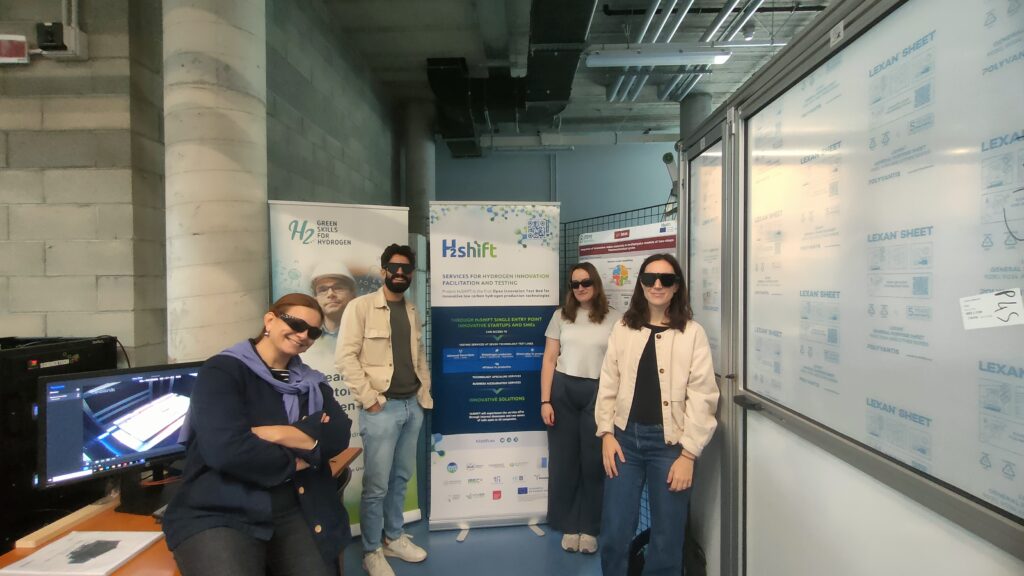
Project H2SHIFT is at its 30 months from the beginning of its journey. The whole Consortium joined for the General Assembly held in Turin at Politecnico di Torino’s headquarter. The recurring meeting has been occasioned to put in a nutshell all the work done on the first wave Open Call and future steps for the success of our OITB ecosystem.
At present, most of the Test Lines advanced facilities are ready and concluding their showcases validation phase:
- Advanced water electrolysis – Test Line #1 (IREC) and #2 (University of South Wales) on high-temperature electrolysis (SOE, PCCEL) and Anion Exchange Membrane Electrolysis (AEMEL) are concluding their testing activities. University of South Wales has supported successfully the 100 kW AEM electrolyser by Protium Green Solutions, assessing stability and durability of materials, as well as water management in long-term usage. By end of the year, the supporting services for the 3D – printed Solid Oxide Electrolysis Cells by H2B2 will be finally concluded (Showcase #1). Cells and stack characterisation was performed by IREC providing useful feedback also for large-scale conditions scenario up to 10 kW. Within Test Line #8, Resolvent also provided CFD and mechanical simulation to validate the stack design. Techno-economic analysis (IREC) and Life Cycle Assessment (PoliMi) will finalise the upscaling service for H2B2.
- Direct Solar Hydrogen Production – Test Line #5 and #6 by Politecnico di Torino on thermo-chemical and photo-electro chemical water splitting have been completed. The thermo-chemical water splitting advanced facilities offers a system for temperature programmed reduction and oxidation and a microreactor coupled with online gas analysis in both vertical and horizontal configurations. The line also offers a High-Flux Solar Simulator for mounting and testing chemical looping water splitting reactors.
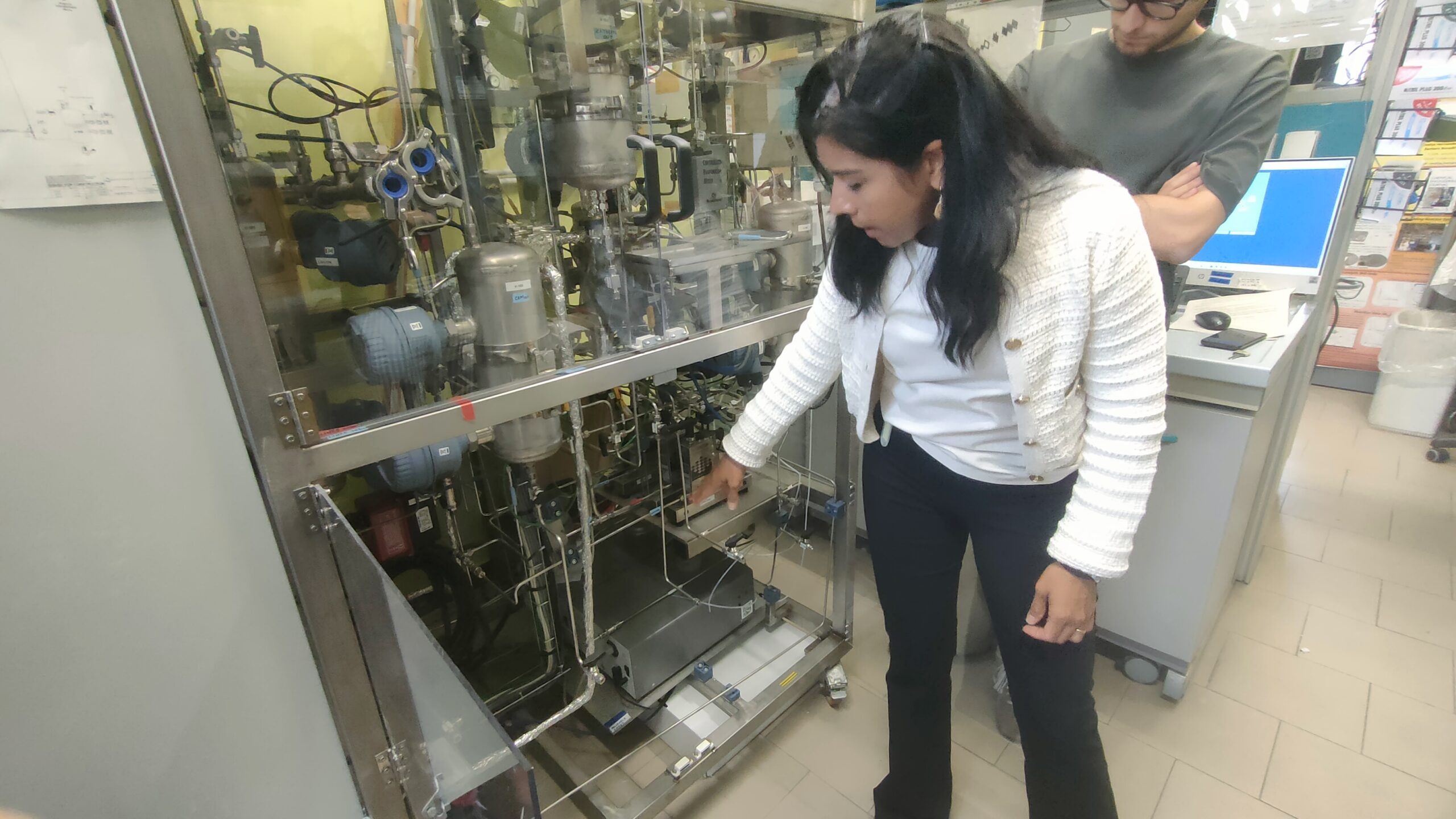
Coming to Test Line 6, it provides services to assess and validate photo-electrocatalytic and electrocatalytic technologies. The infrastructure is composed of automated and computerized control of flow rates, allowing experiments to be carried out at range pressure between 1 and 30bar and temperature from 20 up to 150°C. The facility enables the investigation of the development of materials and characterisation of material’s catalytic performance, as well as performance testing under different gas input conditions. - Biohydrogen – Test Line #3 on biogas/biomethane and CO2 delivering for bio-H2 production is experiencing a significant slowdown which will lead to its completion later in the project. Despite that, the showcase activity of Politecnico di Milano is progressing on schedule to provide an electrified steam methane reforming technology (e-SMR) aimed at produce low-carbon hydrogen from both biogas and biomethane. Test Line #4 managed by Tecnicas Reunidas has been successfully validated trough the compact methanol reformer by Viver Cleantech: the facilities allowed to demonstrate the integration between methanol reforming and purification in a flexible testing environment, moving toward the production of high-purity hydrogen from methanol/water feedstocks.
- Offshore – Test Line #7 (Youwind) focuses on offshore wind park evaluation web-based platform with added application for hydrogen production business case. Currently, the software is ready and under testing with the company identified along the first Open Call.
In September the testing activities kicked into high with Dynelectro and Vision2H, the two H2SHIFT Open Call winners of the first wave. In the framework of Test Line #8 Resolvent is providing support with its COMSOL Multiphysics simulation service to Dynelectro, company specialised in efficient Solid Oxide Electrolyser Cell (SOEC) with extended stack lifetime and limited degradation. After the first step of model set-up, Resolvent is starting the simulation phase to support the Dynelectro’s scale up a higher mature technology with 20-30% cost reduction goal. In parallel, Youwind (Test Line #7) has started the simulation of hydrogen production in a hybrid system together with an offshore wind farm for Vision2H. The company is developing advanced Anion Exchange Membrane (AEM) electrolyser systems for cost-effective and scalable green hydrogen production. The service support provided by Youwind aim to improve performance, durability and scalability of their product, accelerating the shift from prototype to industrial-scale technology.
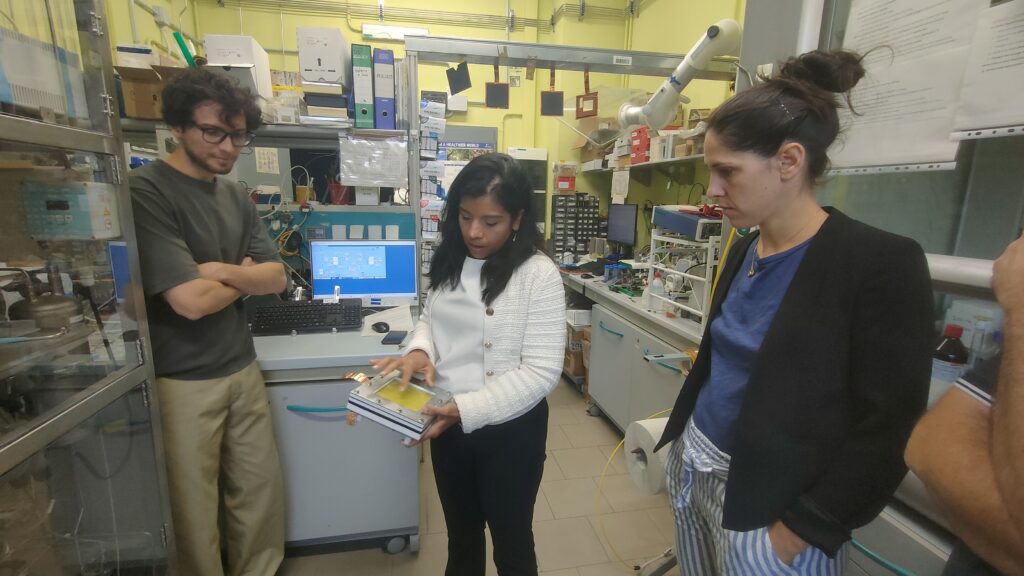
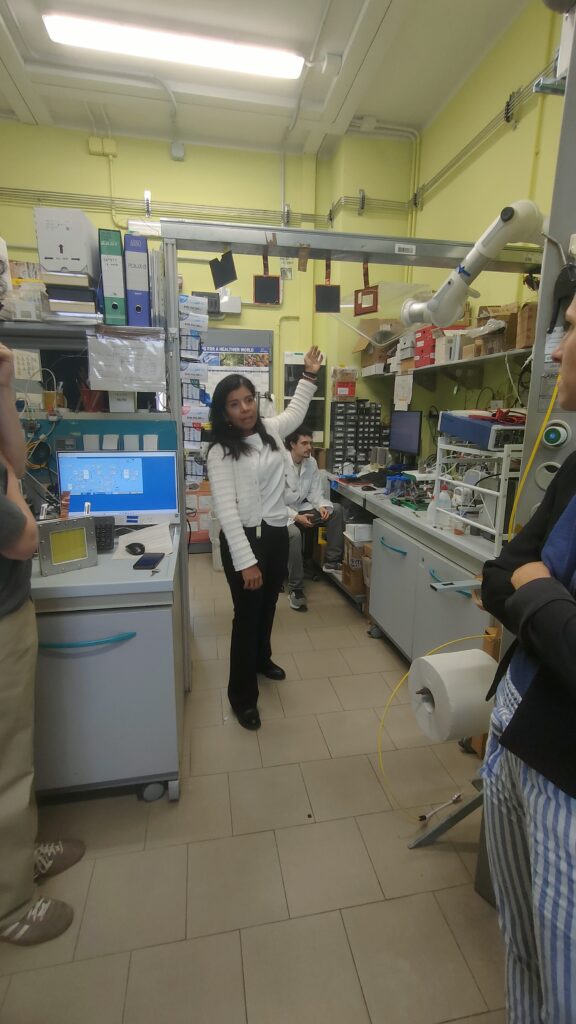
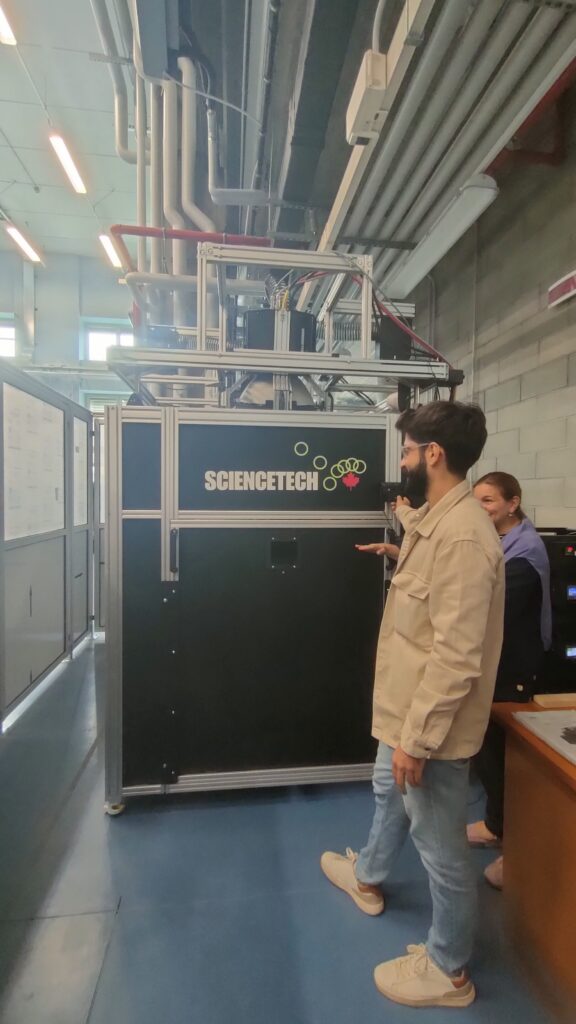
During the meeting, H2SHIFT Consortium had the opportunity to visit Politecnico di Torino’s laboratories and its test lines facilities. Simelys Hernandez introduced us the Solar Fuels Laboratory (DISAT, the Department of APPLIED SCIENCE AND TECHNOLOGY), where her team and she investigate the development and scale-up of catalysts, electrodes and photo-electro-chemical reactors for the CO2 conversion and green hydrogen production. This infrastructure is related with Test Line #6. Francesco Orsini and Domenico Ferrero, part of the research team at DENERG (Department of energy), showed the Test Line #5’s facilities on thermochemical water splitting: the line has been successfully upgraded with a high flux solar simulator (HFSS) composed of two radiative modules of 6.5 kW each. Lamp has been completed installed and start-up in September.
As H2SHIFT moves forward, the consortium is preparing for the project’s next phase and the launch of its second Open Call, which will open up new opportunities for innovators to test and advance their hydrogen technologies. Some details are still being finalised, so stay tuned for further updates on the next steps!